Mississauga 2556: A Complete Staircase and Flooring Renovation
When we purchased our home in Mississauga, the potential was evident, but the flooring was tired. Years of wear had taken their toll, and the carpeted main staircase felt more like a barrier than a welcoming feature. Our vision for this renovation was ambitious: a complete overhaul of the home’s flooring, anchored by a stunning new staircase renovation. We aimed to unify the space using nature oak wood colours, creating a cohesive flow that would serve as the elegant foundation for our family life.
This case study details the journey of this renovation, transforming disjointed floors into a harmonious design statement.
Table of Contents
- Project Snapshot
- Design Vision: Flow and Renovation Goals
- Materials: Red Oak & Engineered Hardwood
- The Renovation Process: A 3-Week Timeline
- The Results: A Unified Home
- Renovation Tips & Advice
- FAQ: Stairs & Flooring Specifics
Project Snapshot
For homeowners in Mississauga and the GTA considering a similar floor and stairs renovation, here are the key specifications:
- Project Type: Full Staircase Renovation & Home Flooring Replacement
- Location: Mississauga, Ontario
- Renovation Scope: Demolition of carpet/tile, subfloor leveling, new staircase construction, full-home flooring installation.
- Key Materials: Solid Red Oak treads, Engineered Hardwood (Nature Oak finish), Wrought Iron Pickets.
- Finish: Commercial-grade polyurethane (Satin sheen).
- Timeline: Approx. 3 weeks
Design Vision: Flow and Renovation Goals
Our Mississauga home had “bones,” but it lacked a consistent design language. The main floor was a patchwork of aging laminate, and the upstairs was covered in beige carpet. The central staircase—creaky and dated—was the primary target for this renovation.
The “Flow” Concept
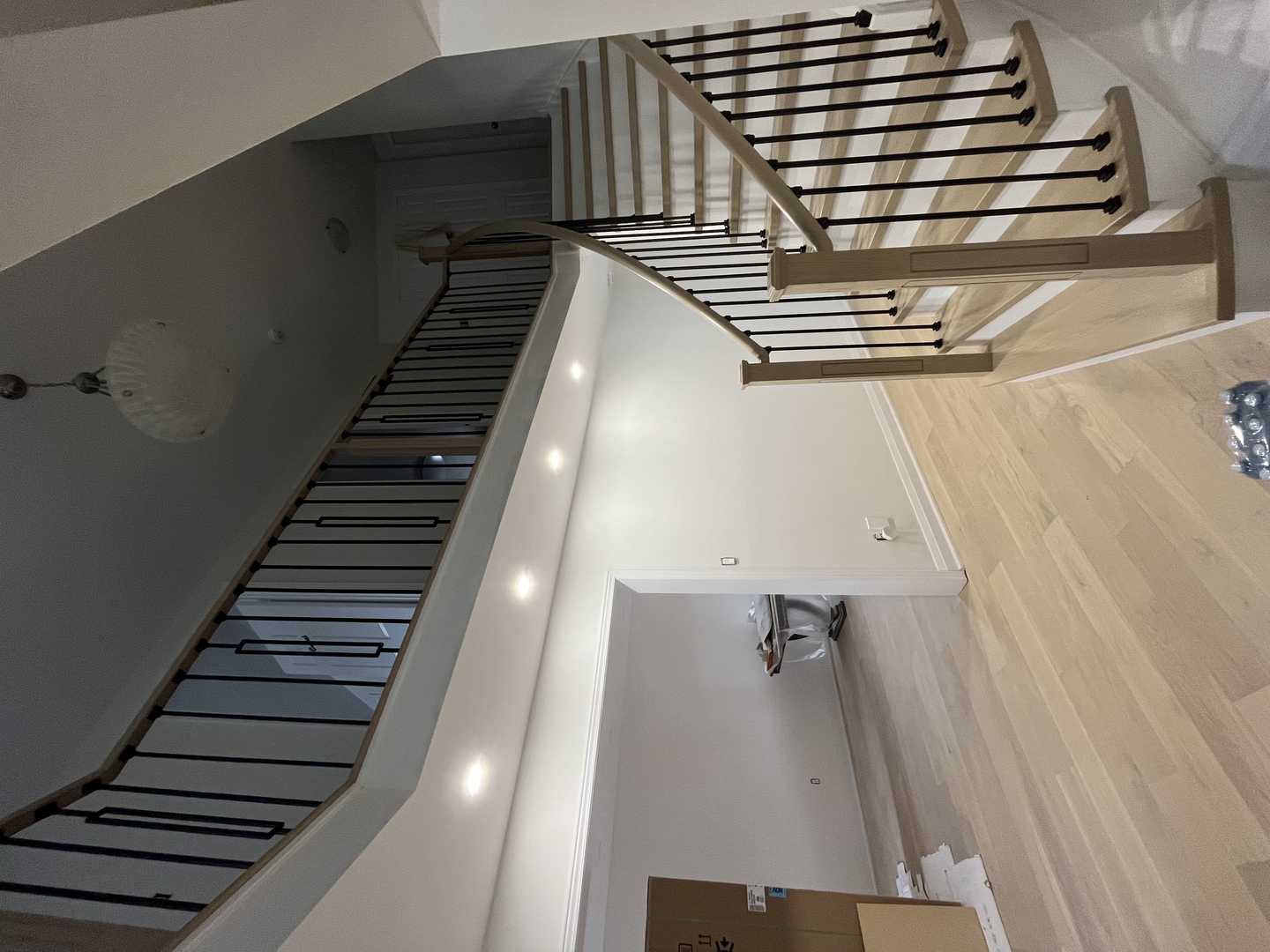
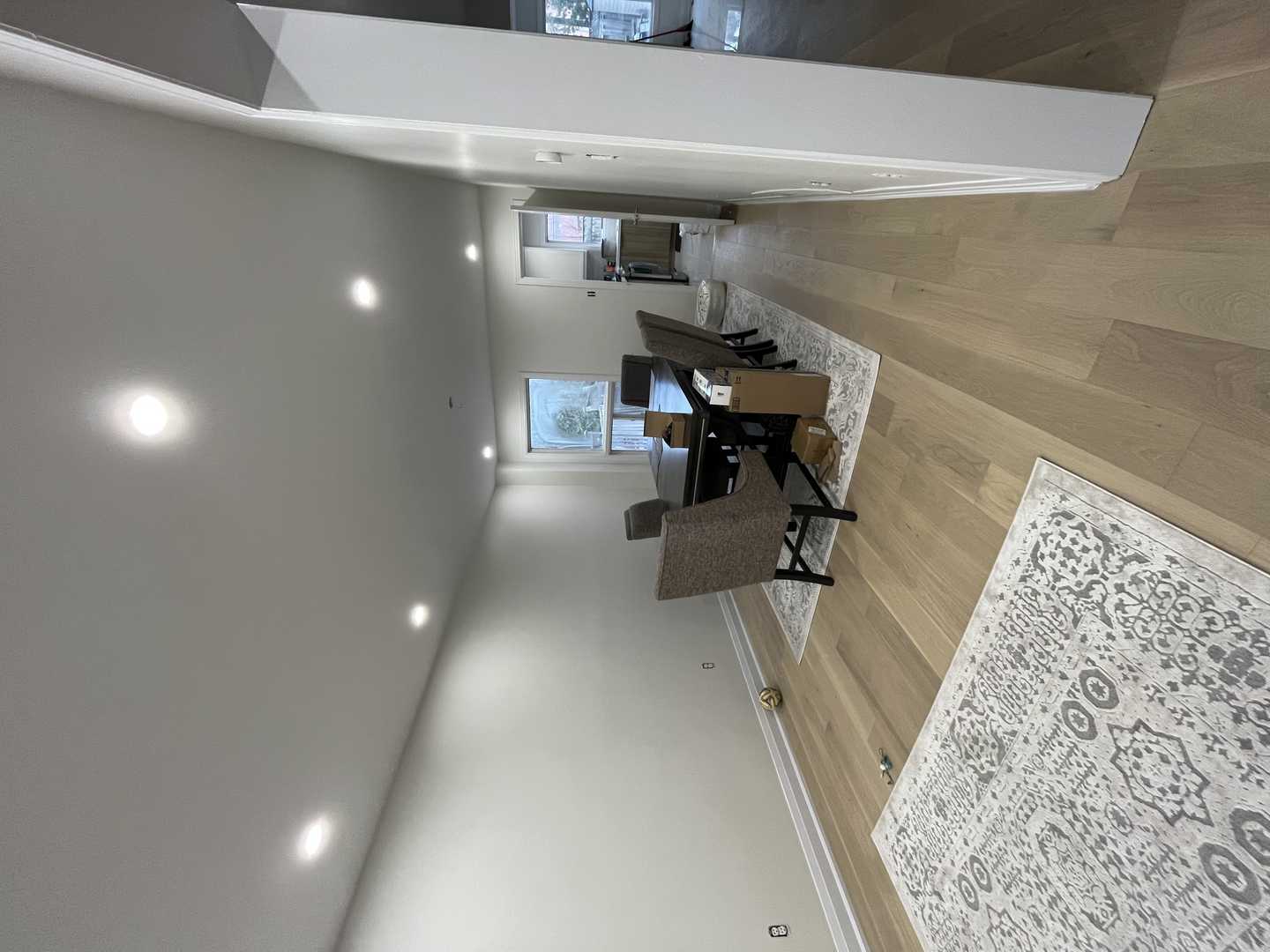
Our primary renovation goal was “flow.” We wanted to eliminate the visual breaks caused by changing materials. By selecting a continuous palette of natural oak, we aimed to guide the eye from the front door, up the stairs, and into the bedrooms without interruption.
Modernizing the Staircase
Functionally, the old stairs were safe but noisy. Aesthetically, they were heavy and dark. The renovation plan involved stripping the stairs down to the stringers and rebuilding them with solid wood treads and sleek iron pickets. This would not only modernize the look but allow for better light penetration in the foyer.
Materials: Red Oak & Engineered Hardwood
Choosing the right materials is the cornerstone of any successful renovation. We needed durability for a busy household and stability for Ontario’s climate.
1. Solid Red Oak Staircase
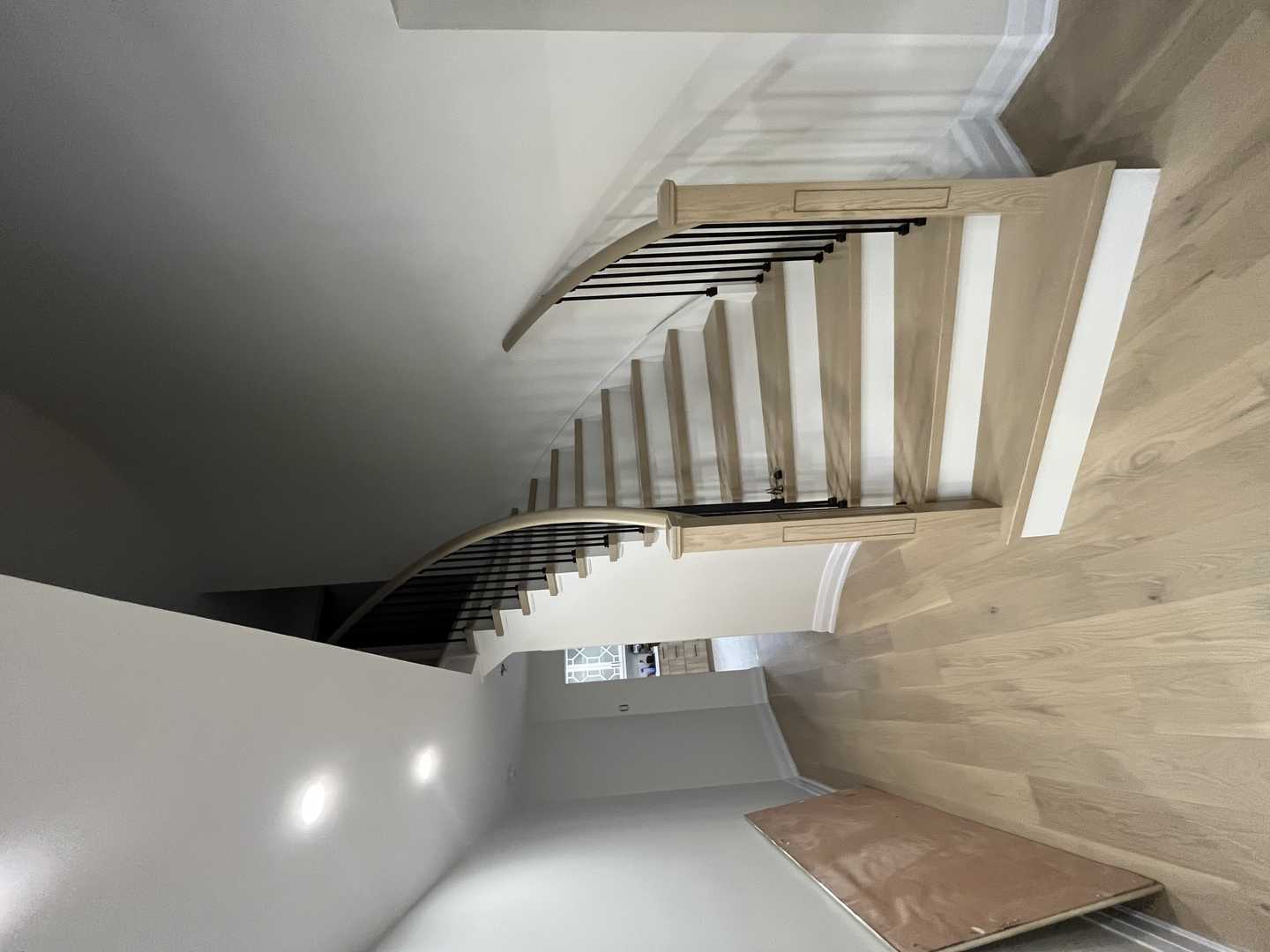
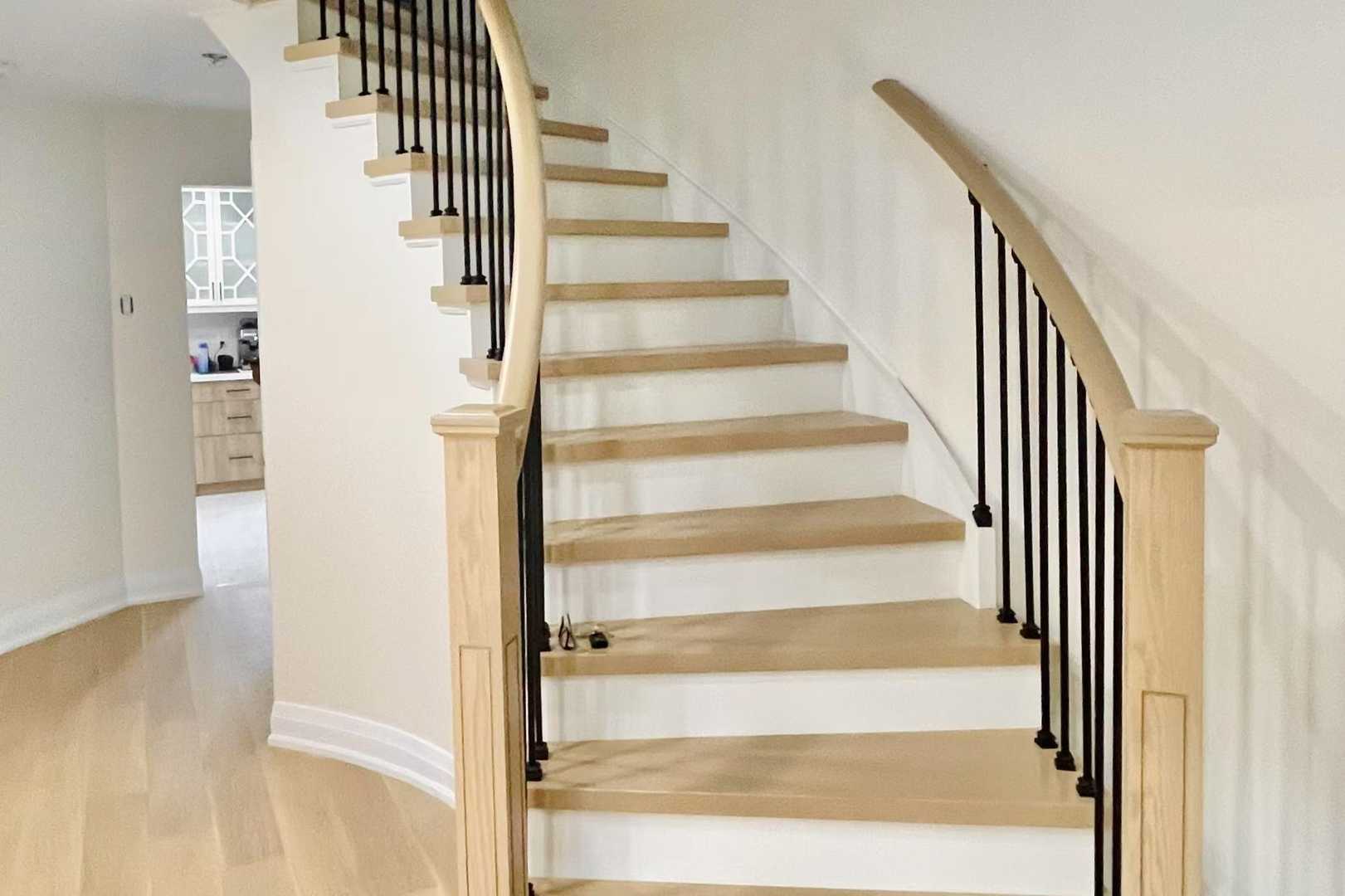
For the staircase renovation, we chose Solid Red Oak for the treads, risers, and handrails.
- Why Red Oak? It is the gold standard for staircases due to its hardness and impact resistance. Its distinct grain pattern absorbs stain beautifully, allowing us to achieve that rich, warm “nature oak” tone.
2. Engineered Hardwood Flooring
To complement the solid stairs, we installed high-quality engineered hardwood throughout the main and upper levels.
- Renovation Insight: In Mississauga’s climate, humidity fluctuates wildly between summer and winter. Engineered hardwood is structurally more stable than solid wood planks, preventing the gaps and cupping that can ruin a floor renovation.
3. Wrought Iron Railing System
We replaced the bulky wood balusters with matte black wrought iron pickets. This choice added a modern industrial touch to the renovation, contrasting sharply with the warm oak to create a sophisticated, timeless look.
The Renovation Process: A 3-Week Timeline
A comprehensive floor and stairs renovation disrupts daily life, but a clear schedule makes it manageable.
Week 1: Demolition and Subfloor Prep
The renovation began with the removal of all carpet and existing flooring.
- Crucial Step: The team spent days screwing down the subfloor and leveling uneven spots. This is vital to prevent squeaks—a common complaint in older homes that skip this renovation step.
Week 2: Staircase Construction
Master carpenters took over. New stringers were reinforced, and the custom-cut Solid Red Oak treads and risers were installed. The precision required here ensures the stairs meet the Ontario Building Code for rise and run.
Week 3: Finishing and Installation
While the stain on the stairs cured, the engineered hardwood was installed in the bedrooms and hallways. The final phase of the renovation involved installing the iron pickets, applying the final coat of durable polyurethane, and installing new baseboards to frame the new floors perfectly.
The Results: A Unified Home
The impact of this renovation was immediate. The entryway, once dark and segmented, now feels grand and open. The continuity of the natural oak colour expands the perceived size of the home. The staircase is no longer just a utility; it is a piece of furniture that anchors the house. Perhaps most satisfying is the silence—the renovation eliminated the creaks of the old stairs, leaving only the solid feel of quality craftsmanship.
Renovation Tips & Advice
- Invest in the Subfloor: During a flooring renovation, never skimp on subfloor prep. Securing the subfloor is the only way to guarantee a squeak-free home.
- Match the Species: If you are staining solid stairs to match engineered floors, try to stick to the same wood species (e.g., Oak to Oak). Different woods take stain differently, which can clash in a renovation.
- Think Long Term: Solid oak stairs can be refinished multiple times. It is a renovation investment that lasts for decades, unlike carpet which wears out in a few years.
FAQ: Stairs & Flooring Specifics
How do I stop my stairs from squeaking during a renovation?
Squeaks are caused by wood rubbing against nails or other wood. A proper staircase renovation addresses this by using construction adhesive (Liquid Nails) between the treads and stringers, and by screwing—not just nailing—the components together. We also reinforce the stringers to ensure the entire structure is rigid.
What is the difference between Red Oak and White Oak for stairs?
Both are excellent choices for a renovation. Red Oak has pinkish undertones and a more swirling, prominent grain pattern. White Oak has golden/brown undertones and a straighter, tighter grain. For this project, Red Oak was chosen for its classic warmth and ability to hide minor scratches and dust better than the tighter grain of White Oak.
Do I need to replace my baseboards during a floor renovation?
It is highly recommended. Removing old flooring often damages existing baseboards. Furthermore, new flooring heights rarely match the old ones perfectly. Installing new baseboards allows for a clean finish without the need for unsightly quarter-round trim, giving your renovation a much more professional, high-end look.
A home is an investment, and a quality renovation ensures that investment grows. This Mississauga project demonstrates how updating the “bones” of a house—the floors and stairs—can completely transform its character.
Ready to start your own renovation journey? We specialize in bringing vision to life with precision and care. Contact us for a free quote and let’s discuss your project.